
When our clients walk through the door, they have three questions on their minds. This is the first…
It is one of the most important subjects to discuss, and before we design it, one of the most difficult questions to answer. When we talk about total project cost, we are really talking about three buckets.
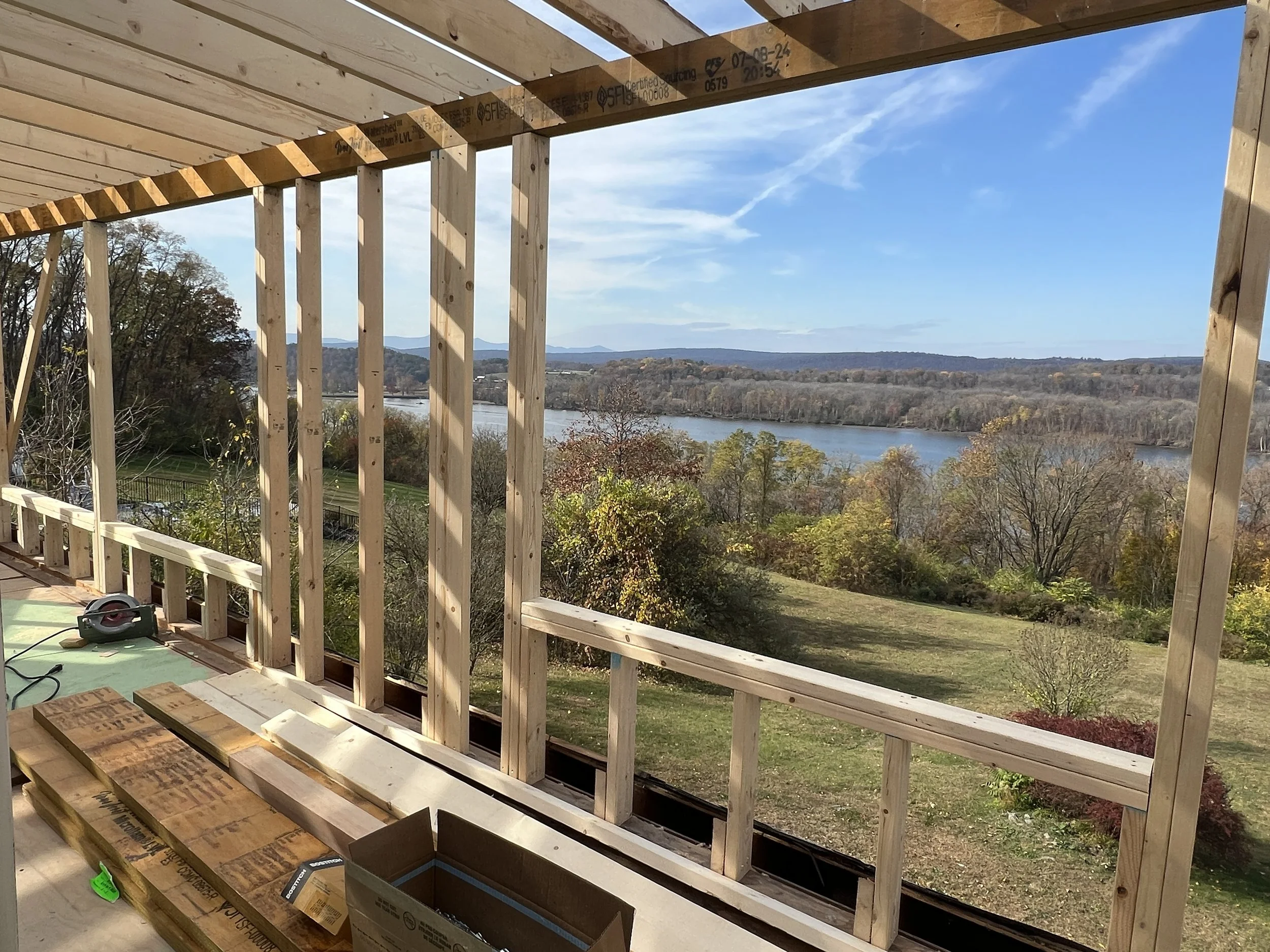
First is construction. This one is obvious, and most often what gets discussed when budgeting. It includes things like, framing, insulation, mechanical systems, fixtures and finishes.
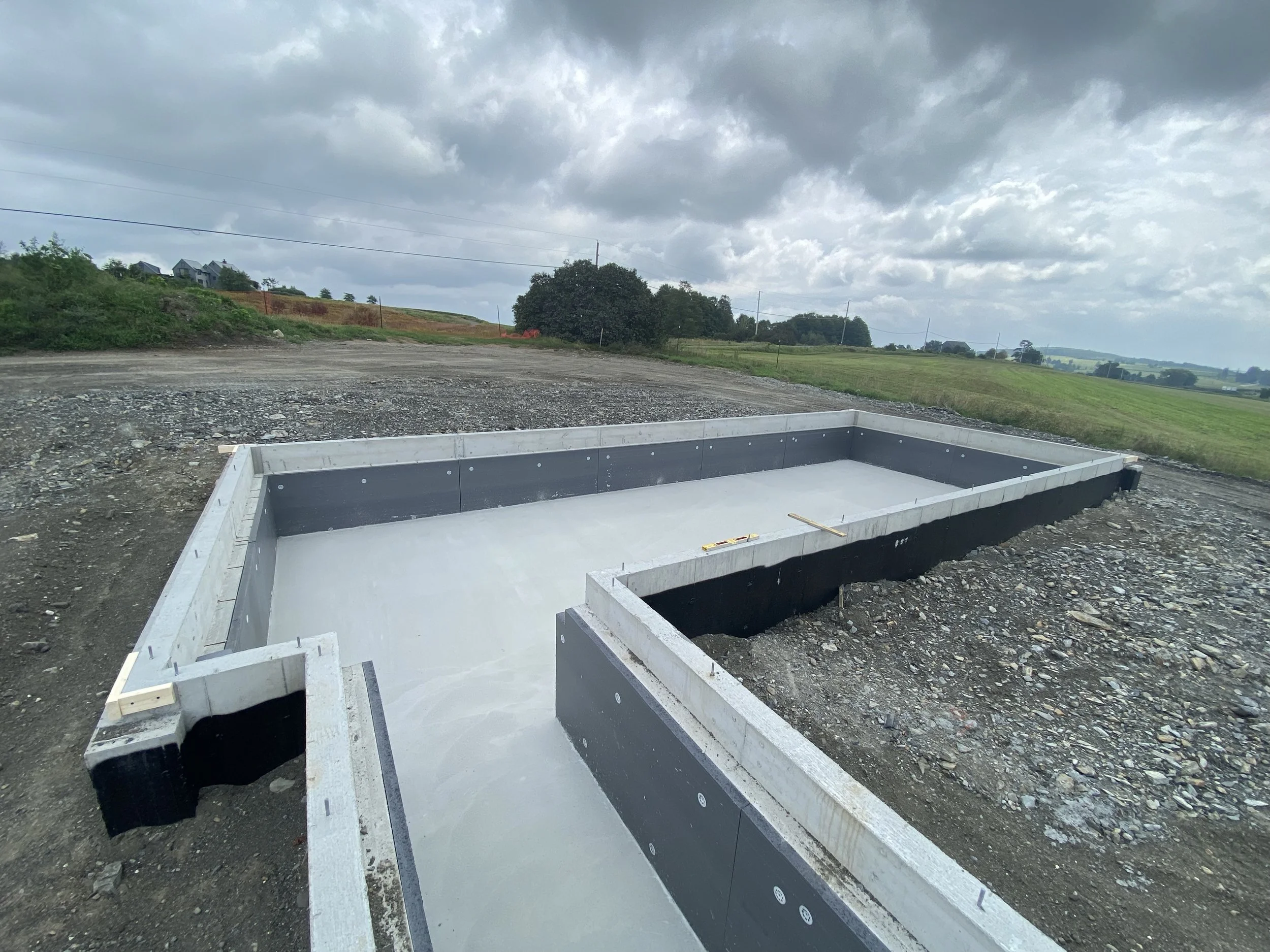
Second is site work, which includes things like wells, septic systems, driveways, utilities, and drainage. All things you need, and not including the pretty things like trees, flowers and other landscaping (although it is possible to make a driveway pretty!).
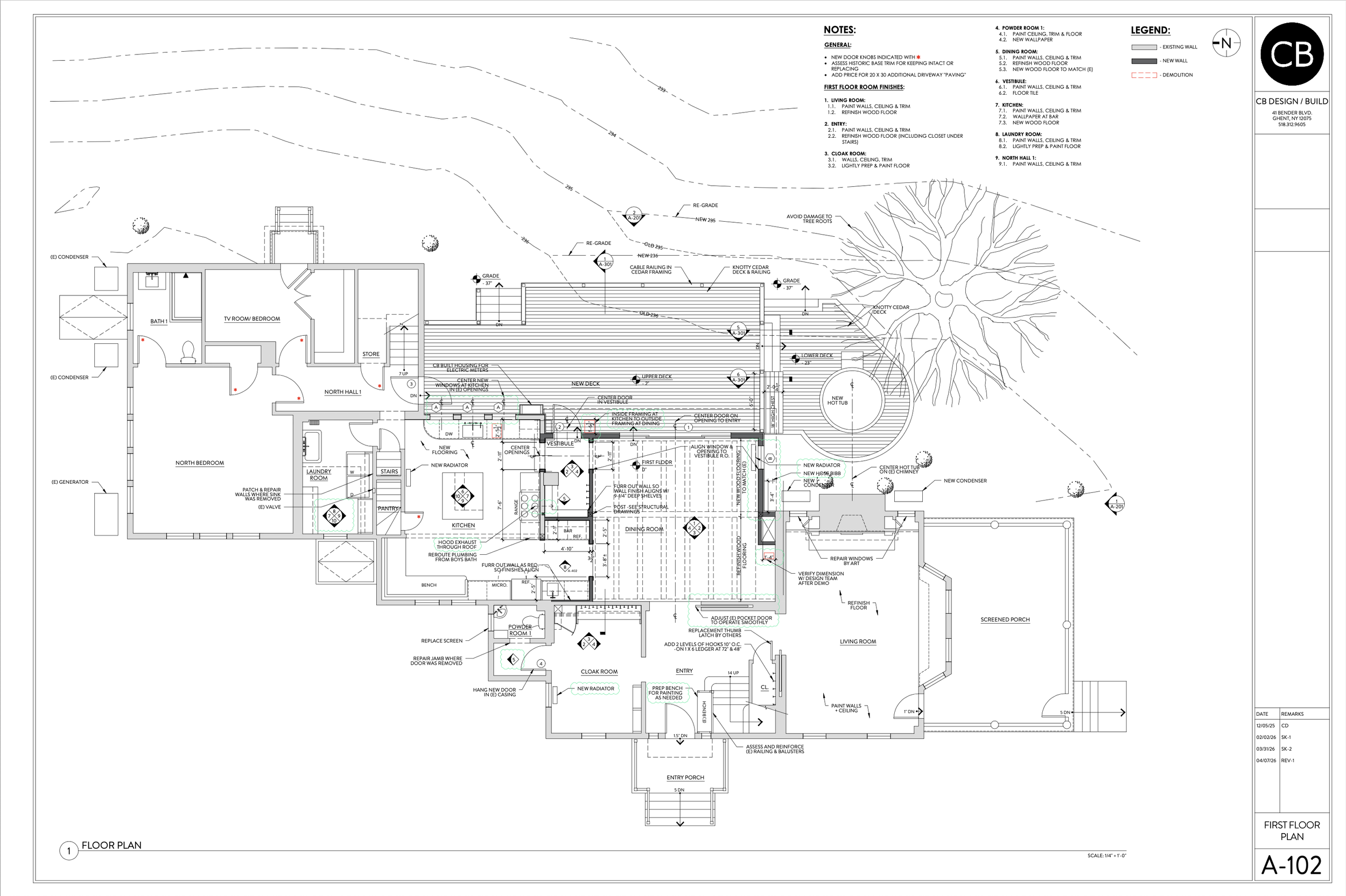
Third is soft costs, which covers design, engineering, surveys and municipal approvals (when they are required).
Those three together give you the real number.
Construction
For the kind of custom work you see on our website, we have some general rules of thumb derived from recent projects. For instance, a well designed, fully custom kitchen is often in the $80,000 to $120,000 range, and bathrooms commonly land between $40,000 and $60,000. In both cases we are most often doing custom cabinetry and stone countertops, moving interior walls, maybe new exterior windows and doors, etc. They almost always involve changes to plumbing and electrical, and typically all new finishes on walls, ceilings and floors.
On custom homes or major additions, we start our budget discussion in cost per square foot to give you a general sense of scale. For our work, that typically falls somewhere between $400 and $800 per square foot, with many projects landing around $600 per square foot for the building itself. That number does not include land, and it is not a quote, it is a good way to stay grounded in reality right from the start. Gut renovations can be in the $300 to $600 per square foot range.
One major caveat: Small projects, and old houses trend higher. A highly detailed, custom 1,200 square foot house can easily cost more per square foot than a simpler 2,000 or 2,500 square foot home. The coordination, the level of detail, and the fixed overhead do not scale down neatly just because the footprint is smaller. Complexity tends to drive the relative cost more than size.
Old houses… always have surprises. Most budget shifts here are not because anyone went wild with scope, they’re because of things we couldn’t see until we opened walls or floors. Rot, odd framing, foundations not as expected, (NO foundation, Ahh!) asbestos, etc. That’s why renovating an old house can cost as much as, or more than, building new. It’s also why we recommend more contingency funds, and why we start with ranges rather than a precise number. If you want maximum predictability, a new build is cleaner, but if you want the charming old house, we just go in with eyes open and some financial padding for the surprises we know are coming, even if we don’t know what they will be.
Site Work
One area where people tend to underestimate costs is site work and infrastructure. By the time you install a well, septic system, driveway, bring in utilities, and address grading or drainage, you are often adding $100,000 or more before you even start building the house itself. If you are building on challenging property, with steep slopes, densely wooded, or way off the road, it can be considerably more. That is why something that feels like a $900,000 house on paper can become a $1,200,000 project once everything is accounted for. Usually that work is not optional, it is simply what it takes to make the project happen.
Soft Costs
On the soft cost side, we try to keep things straightforward and transparent. Our design fees for full service work generally fall between 10% to 15% of construction cost. We bill hourly for design work and know our range based on prior projects, similar to how we estimate building costs. Larger projects trend toward the low end of that range, while smaller or very complex projects move toward the higher end of it. 12% is our average for the last 3 years across all project types. Engineering, survey work, and other consultants typically add 1% to 2% of construction cost. Interior Design and Landscape Design are not typically included in our fees. If the project is simple or you have something in mind that is very similar to work we’ve already done, we can support with these, but they are not our specialty. You may want to hire outside consultants for these, or have consultants already from prior projects. We are happy to coordinate with them, or we can make recommendations for great consultants we’ve worked with successfully on prior projects.
How We Estimate
It's not possible to predict the final cost accurately on day one. Instead, we follow a process where the numbers get more precise as the design evolves. Initially we talk in per square foot price ranges so that expectations are aligned. As we move into Schematic Design, we connect those square foot numbers to the elements in an actual plan. During Design Development, we build out detailed budgets, and have real conversations about tradeoffs. By the time we reach Construction Drawings, the goal is to have a fully itemized budget with clear choices and very few surprises. While we are building your project, because our projects are billed time and materials, we constantly track costs against the Construction Estimate, to give you a rolling snapshot of progress, including any adjustments to the scope, budget or timeline. This means you always have up to date assumptions of what your final costs are likely to be.
So when someone asks, “How much do your projects cost?” The honest answer is that they live in the hundreds of dollars per square foot, not in bargain territory. Smaller or more complex projects often cost more per square foot, not less. The real number always includes construction, infrastructure, and soft costs, and once those are combined, it is very common for a $500,000 idea to become a $700,000 to $1,000,000 reality.
Our role in this process is not to promise you the world and let the chips fall as we go. It is to make costs clear, well understood, and manageable, and to help shape the project so that you know what to expect on the road to your dream home.